Posts

Showing posts with the label book

"Site Reliability Engineering: How Google Runs Production Systems"; my key take-aways
Image
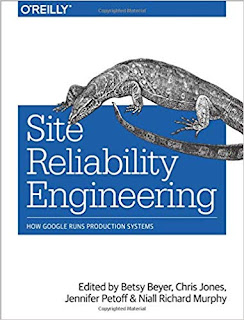
" Site Reliability Engineering: How Google Runs Production Systems " edited by Betsy Beyer, Chris Jones, Jennifer Petoff and Niall Richard Murphy contains a number of insights into Google's SRE practice. It is a bit repetitive at times but this assists in drilling in some of the key points. My key take aways were: Google places a 50% cap on all aggregate "ops" work for all SREs - tickets, on-call, manual tasks, etc. The remaining 50% is to do development. If consistently less than 50% development then often some of the burden is pushed back to the development team, or staff are added to the team. An error budget is set that is one minus the availability target (e.g. a 99.99% availability target will have a 0.01% error budget). This budget cannot be overspent and assists in the balance of reliability and the pace of innovation. Cost is often a key factor in determining the proposed availability target for a service. if we were to build an operate ...
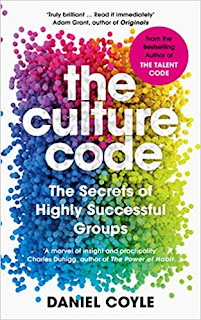
Book Review: "The Culture Code: The Secrets of Highly Successful Groups" by Daniel Coyle

Image
I enjoyed reading "The Culture Code: The Secrets of Highly Successful Groups" by Daniel Coyle. It has lots of great stories about groups in various fields (SEALs, sports teams, corporate environments, creative companies, aircraft crew and more) and the various (often subtle) attributes that makes these teams successful. Key takeaways for me were: Safety is the foundation on which strong culture is built. Our brain is obsessed with psychological safety and we require lots of signalling over and over to feel safe. A sense of belonging is easy to destroy and hard to build. Patterns of interaction of successful groups that have good chemistry often include: Close physical proximity, often in circles Profuse amounts of eye contact Physical touch (handshakes, fist bumps, hugs) Lots of short, energetic exchanges (no long speeches) High levels of mixing; everyone talks to everyone Few interruptions Lots of questions Intense, active listening Humour, laughter...

Book Review: "Seven eLements of Leadership for a New Breed of Leader" by Michael A. Pitcher

Image
Written in an engaging manner with lots of examples based around the Seven eLements of "Laugh, Learn, Listen, Language, Lagniappe, Legacy, Love" I took away a number of good points to consider, many of which were good reminders and some of which were good reinforcement of things I have already been doing. My key takeaways: General Leadership = Influence. And you influence ALWAYS! If you’re in a position to influence the behaviour, thoughts, or feelings of others, then you’re in a leadership role. Coaching is teaching a specific set of skills required for success in a specific situation. Mentoring is sharing wisdom so that the mentee has the opportunity to learn from the life experiences of the mentor. Laugh Authentic leaders show vulnerability and allow others to see their humanity. Laughter is the authenticity that opens the window so others can see inside. Laughter opens the door for meaningful conversations that create meaningful relationships. Humour defuses ...

Book Review: "The Power of Moments" by Chip Heath & Dan Heath

Image
I was listening to a podcast where one of the authors of this book was explaining the concept of "The Power of Moments" and provided some examples that compelled me to buy the book straight away (which is very rare for me). The book is packed with examples and lots of great advice, albeit it is a bit verbose at times. The key concept is that we can be more impactful as leaders and as people by recognising and creating more "moments" / memorable experiences. We can be the designers of moments that deliver elevation, insight, pride and connection. These extraordinary moments are what make lives meaningful. My key takeaways: Three situations that deserve punctuation: transitions, milestones, and pits.  Transitions include first day of work, weddings and graduations. A milestone may be the length of time an employee has been at the company, getting to a key point in a project or completing a marathon. Examples of pits include: a positive response to a service...

Book Review: "Exponential Organizations: Why new organizations are ten times better, faster, and cheaper than yours (and what to do about it)"

Image
Exponential Organizations by Salim Ismail, Michael S. Malone and Yuri Van Geest contains lots of useful information about how to give your organisation a chance of survival (be it a new one or an existing one of any size). It was repetitive at times and at points it felt like a Singularity University sales pitch but there was sufficient useful content for me to deem it a worthy read. My key takeaways: "Once any domain, discipline, technology or industry becomes information-enabled and powered by information flows, its price/performance begins doubling approximately annually."  Ray Kurzweil Rather than owning assets or workforces and incrementally seeing a return on those assets, Exponential Organisations (ExOs) leverage external resources (people, systems, machines etc.) to achieve their objectives. An exception to this is for scarce resources and assets. Maintaining a small core allows significant flexibility.  It also brings in fresh perspectives and expertise. E...

Book Review: "The Lean Startup" by Eric Ries

Image
The Lean Startup is a book I have been meaning to read for years and never got around to. It contains lots of useful advice and good case studies explaining experiences of what has and hasn't work. The book is oriented towards software development startups (and software development innovation in general in any sized organisation) and could have easily been condensed into a third its size. Key takeaways: Build, Measure, Learn (go through this loop as fast as you can) Use validated learning and measure using actionable metrics, not vanity metrics. Use cohort analysis. Do split testing to measure what matters to customers Build a Minimal Viable Product (MVP), gain quick feedback from customers, learn quickly and evolve as required Use 5 whys for root cause analysis and identifying what to target in terms of improvements

Book Review: "Sprint: How to Solve Big Problems and Test New Ideas in Just Five Days" by Jake Knapp, John Zeratsky, Brad Kowitz

Image
Sprint is a superb book that is very easy to read, with real world examples of how to apply the techniques discussed. I have taken some of the concepts discussed and am applying them to other activities beyond a 5 day Sprint process. Thoroughly recommended.

Book Review: ArchiMate 2.1 Specification

Image
Having used ArchiMate for the past few months (with guidance from an ArchiMate guru) I decided to read the specification . The specification is fairly dry reading, quite academic at times and is more of a reference guide. I found myself wanting a more practical book so have subsequently ordered what has been highly recommended to me; " Mastering ArchiMate - Edition II " by Gerben Wierda.

Book Review: The 4-Hour Work Week: Escape the 9-5, Live Anywhere and Join the New Rich

Image
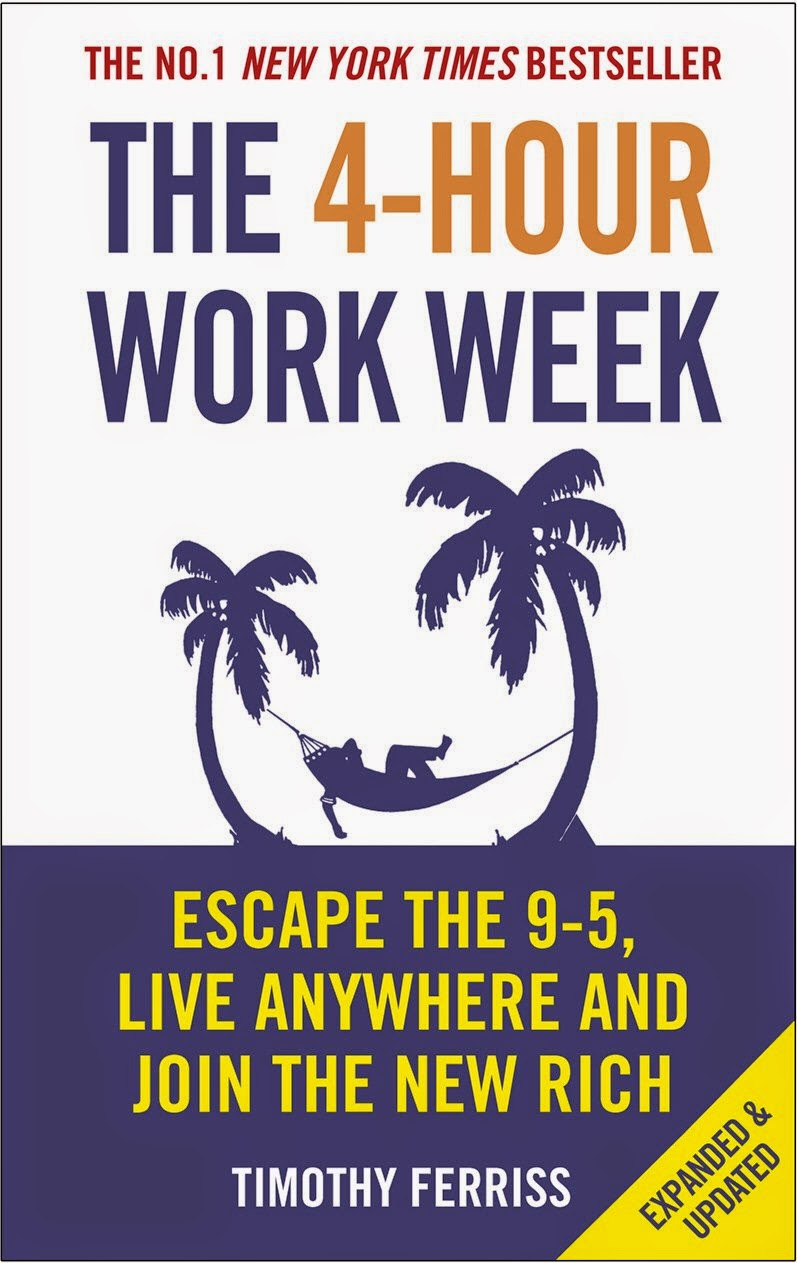
"The 4-Hour Work Week: Escape the 9-5, Live Anywhere and Join the New Rich" by Tim Ferriss is one of those books I had heard about but not got around to reading until now. My key takeaways: Think about what parts of your work or personal life you could outsource to free up time to do other things (some good references are provided in the book such as elance, Your Man In India and Brickwork).  There are some good reminders about time management, handling interruptions, testing (even down to product name testing via Google AdWords) and keeping it simple for the customer by reducing the number of decisions they need to make. Some good advice was provided about having a minimum advertised pricing clause in order to prevent wholesaling wars (not only by organisations, but also by discounters on eBay) There are some useful links to tools and sites to get a website up and running quickly, some good advice about projecting that your company is bigger than it is (e.g. by hav...

Book Review: Nikola Tesla: Imagination and the Man That Invented the 20th Century

Image
I found Nikola Tesla: Imagination and the Man That Invented the 20th Century to be a very quick read and a well written synopsis of Nikola Tesla and imagination. I had heard of Tesla but didn't know much more and this book was a great introduction to an amazing person and a great inspirational read about genius being a path anybody can take, never giving up, thinking being the enemy of creativity and varied knowledge and experiences being more likely lead to fresh ideas. It is not a book for getting an in depth understanding of Tesla or in depth information about self improvement or imagination, but it is a good short inspirational read.

Book Review: “Mark Zuckerberg: Ten Lessons in Leadership”

Image
I was sceptical that “Mark Zuckerberg: Ten Lessons in Leadership” by Michael Essany would be worth reading, but decided to give it a go anyway. It isn’t a large book, but the documentary style works well and I found it in fact contained good practical advice including inspiration to get out there and make a difference, leveraging mentors, getting started, focusing on the idea first and details later and many other great pearls of wisdom. The key points I noted were: When popularity supplants passion at the forefront of the entrepreneur’s mind, the likelihood of success rapidly diminishes. Live your regular life and just try to build stuff that matters. The most successful entrepreneurs of tomorrow will be those who take to the next level that which we have today. If you want to be the next Steve Jobs, you're not required to invent anything in order to do that. You simply have to listen, observe, and innovate. Young entrepreneurs are notorious for idolizing the...

Feel the Fear and Do It Anyway

Image
"Feel the Fear and Do It Anyway" by Susan Jeffers contains lots of good practical advice, such as the power of eliminating negativity and pessimism from your vocabulary, taking responsibility for your reactions, how to have a balanced life, and many other great pearls of wisdom. Here are some of my key take aways: All you have to do to diminish your fear is to develop more trust in your ability to handle whatever comes your way The only way to get rid of the fear of doing something is to go out and do it Not only am I going to experience fear whenever I'm on unfamiliar territory, but so is everyone else Pushing through fear is less frightening than living with the underlying fear that comes with a feeling of helplessness.  Before you take any action in life, ask yourself: "Is this action moving me to a more powerful place?" If it isn't you will think twice about doing it. Begin eliminating the terribles, can'ts, problems, struggles and so o...

Book Review: How To Have Confidence And Power In Dealing With People by Les Giblin

Image
" How To Have Confidence And Power In Dealing With People ” by Les Giblin had been sitting on my bookshelf for years and I was expecting it to be an over the top sales book so had put off reading it, but I was so wrong and now wish I had read it years ago. This is a superb book that has lots of great advice, good examples and is well written. I also really appreciate the short recap that each section has at the end summarising the key points.

Book Review–“Emotional Intelligence: Why it can matter more than IQ” by Daniel Goleman

Image
I found “Emotional Intelligence: Why it can matter more than IQ” by Daniel Goleman to be quite an academic (and at times scientific) view of emotion that includes some good story-telling. It started very dry but I found it got more engaging about 60 pages in. I found the book to be more focussed on describing emotional intelligence as opposed to providing much guidance about how to improve your emotional intelligence. Despite this, I did however find that it contained a wealth of interesting information. My key takeaways were: We have two minds (rational and emotional) that typically operate in tight harmony. Anger builds upon anger; the emotional brain heats up. Distraction is a highly powerful mood-altering device. This is due to the fact that it is hard to stay angry when you’re having a pleasant time. Thoughts are associated in the mind not just by content, but by mood. People have what amounts to a bad-mood thoughts that come to mind more readily when they are down. While...

Book Review: Six Thinking Hats by Edward de Bono

Image
Six Thinking Hats by Edward de Bono is a very easy read and provides a good simple approach for exploring ideas and problems through thinking from different perspectives in a structured manner. There are six hats, each of which have different characteristics: White Hat: facts, figures, information Red Hat: emotions and feelings, hunch and intuition Black Hat: devil's advocate, negative judgement Yellow Hat: optimism, positivity Green Hat: creativity Blue Hat: controlling of the hats and thinking, orchestration   The idea of the hat is that a person will put on or be asked to put on a hat and to express a view from that perspective. This gets people thinking in different ways and since it is play-acting people are more willing to express views from under the security of the hat that otherwise may be left unsaid.

Book Review of “Cloud Application Architectures”

Image
“ Cloud Application Architectures: Building Applications and Infrastructure in the Cloud ” by George Reese is more of an Amazon EC2 and S3 user manual than covering Cloud Application Architecture in general. Having said that I did find that it still did have some good content although in many areas it was very high level.  Some diagrams were also missing from my copy. There was a good Cloud Computing and Amazon Web Services overview.  Cloud ROI, Monitoring & Management, and reiteration that Laws need to be considered were also covered, as were development implications, and in particular multiple-server transaction management. If you want an overview of Amazon Web Services, EC2 and S3 then this book may be right for you.

Business Stripped Bare: Adventures of a Global Entrepreneur by Sir Richard Branson

I thoroughly enjoyed reading this book from Richard Branson.  This is a good inspirational and motivating book that is very easy to read.  I knew that there were a number of Virgin companies prior to reading this book, however I was not aware of how many different industries Virgin is involved with (music, mobile, space travel, planes, trains, finance, health clubs, …). The culture of Virgin is a key component of the why the Virgin companies have been successful.  Whilst there is not a step by step guide for how to build a successful company, there are many useful insights and lessons learnt.  Caring and Encouraging your people, Customer-focus, Innovation, Embracing leadership, Fun, Learning from mistakes and Social Responsibility are key attributes I now associate with the Virgin brand.

Be Remarkable, Focus on the Innovators and Early Adopters

Image
Having read Tribes from Seth Godin and enjoyed it I decided to give Purple Cow a go. Written in a very similar, easy-reading style, I took away two key messages from Purple Cow : 1. Be Remarkable 2. Focus on the Innovators and Early Adopters Every day, consumers come face to face with a lot of boring stuff, a lot of brown cows, but you can bet they won’t forget a Purple Cow. By building remarkable features into products (as opposed to thinking of marketing as just slapping some paint on top of the product or service) the idea is that the Innovators and Early Adopters (aka the “Sneezers”) will essentially sell the product or service for you. It is therefore important to ensure that it is an easy sell for them. I found many of the examples to be a bit too US centric but the key points were still easy to comprehend. Whilst the message is very simple, this book provides some great motivational passion for creating products that stand out and make a difference. A recommended...

Different leadership styles are required for different stages of team development

Image
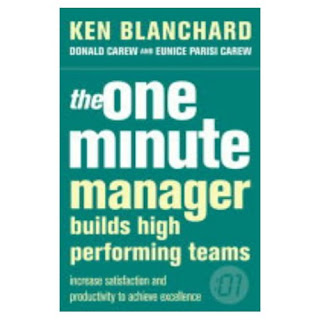
"The One Minute Manager builds high performing teams" by Ken Blanchard, Donald Carew and Eunice Parisi Carew is an excellent book that simply explains through examples the four stages that teams go through and that a different leadership style is required in each; namely Orientation, Dissatisfaction, Integration and Production. For each stage, it is clearly articulated what the Characteristics are, what the Needs of the team are, what the Issues are that need to be addressed and what type of leadership style is appropriate. It is a very quick and easy read, written as a conversation, and I found it very easy to relate to when I looked at various projects I had been involved with. I will be re-reading this again.

Embrace change, be a heretic!

Image
"Tribes: We Need You to Lead Us" is an easy read from Seth Godin that presents the case for why You should be leading. Everybody can inspire a tribe towards collective action, regardless of where they sit in an organisation, and this book challenges you to step up, lead and challenge the status quo. There are some great snippets of information throughout, and I agree with most of what he is suggesting re Leadership, although there is also a hate message re Management that I think is a bit too strong. It is a good book for motivation and whilst not prescriptive in how to lead provides some good pearls of wisdom for leading in the digital age.